
Introduction: India’s Digital Rise Comes With New Risks
India is witnessing an unprecedented transformation powered by fintech, digital payments, AI, blockchain, and data-driven governance. From UPI transactions crossing billions every month to rapid adoption of digital lending, wealth tech, and embedded finance, the country is moving fast toward a cashless and decentralized digital economy.
However, as India’s fintech ecosystem expands, new-age threats to national security are emerging—often invisible, borderless, and highly sophisticated.
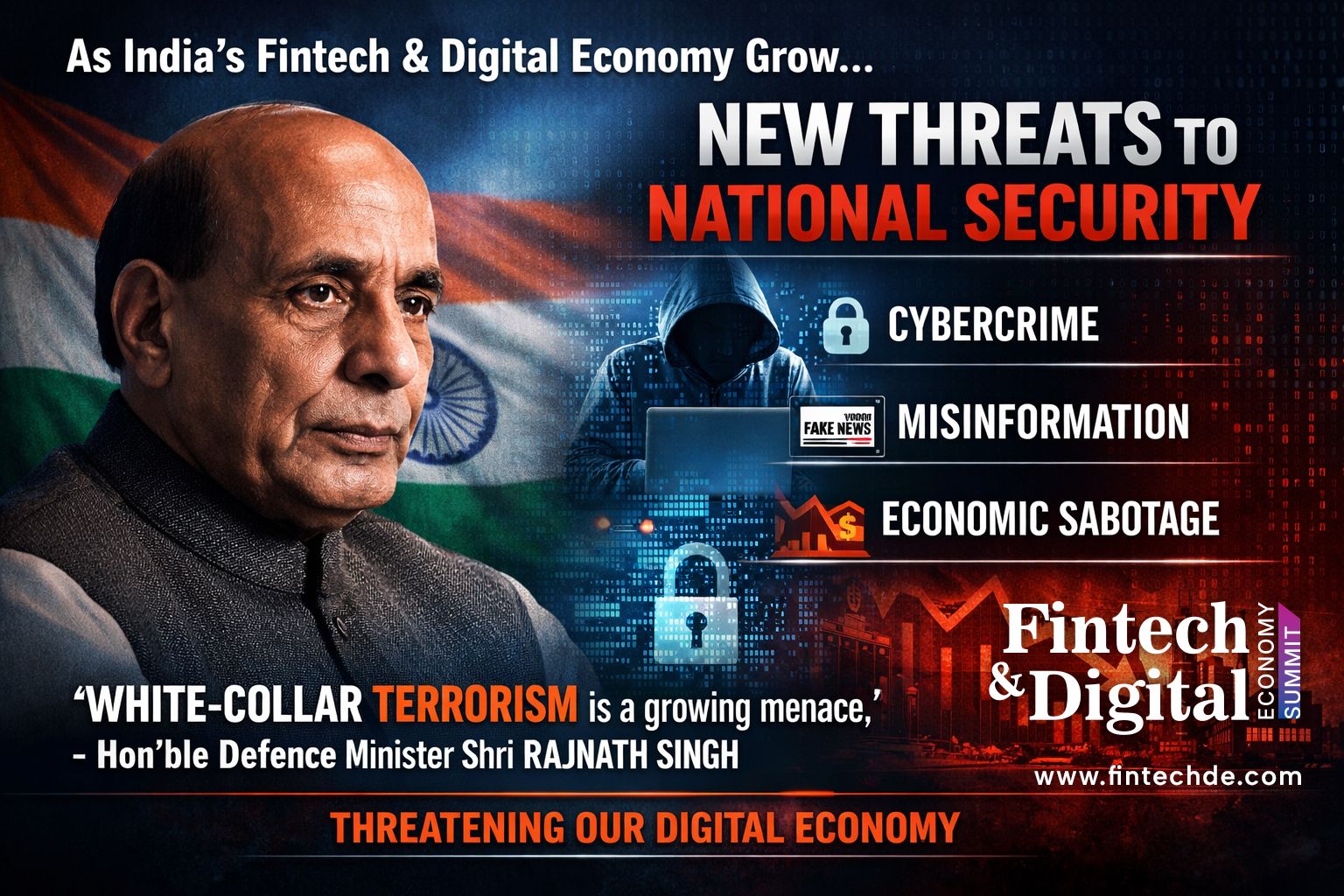
As Hon’ble Defence Minister Rajnath Singh warned:
“White-collar terrorism is a growing menace.”
These threats are not traditional military attacks. They come in the form of cybercrime, misinformation, financial fraud, and economic sabotage, capable of destabilizing trust, institutions, and markets.
Understanding “White-Collar Terrorism” in the Digital Economy
White-collar terrorism refers to non-violent yet highly destructive activities that exploit digital systems, financial infrastructure, and human psychology to cause large-scale economic and social damage.
Unlike conventional terrorism, these attacks:
- Do not involve weapons
- Are difficult to trace
- Operate across borders
- Target data, money, and trust
Major Digital Threats to India’s National Security
1. Cybercrime: The Backbone of Digital Threats
With the explosion of digital payments and online banking, cybercrime has become the biggest threat to fintech ecosystems.
Key Cybercrime Risks:
- UPI frauds and phishing attacks
- Ransomware attacks on banks and NBFCs
- Data breaches of Aadhaar-linked platforms
- Account takeovers using AI-powered deepfake KYC
Why It’s a National Security Issue:
- Financial instability
- Loss of public trust in digital systems
- Exposure of sensitive citizen data
- Funding of illegal or hostile activities
2. Misinformation & Fake News: Digital Weaponization of Trust
Misinformation spreads faster than malware.
False narratives related to:
- Banking failures
- Digital payment safety
- Government fintech policies
- Crypto and stock market rumors
can trigger mass panic, bank runs, and market volatility.
Impact of Misinformation:
- Sudden withdrawal of funds
- Stock market crashes
- Damage to national and global investor confidence
- Political and social unrest
3. Economic Sabotage Through Fintech Channels
Economic sabotage involves deliberate attacks on financial systems to weaken a country’s economy.
Examples include:
- Attacks on payment gateways
- Manipulation of trading platforms
- Cross-border money laundering via crypto
- AI-driven market manipulation
Mapping Digital Threats to National Security Risks
| Threat Category | Mode of Attack | National Impact |
|---|---|---|
| Cybercrime | Phishing, ransomware, account takeover | Financial losses, data leaks |
| Misinformation | Fake news, deepfakes, social engineering | Public panic, market instability |
| Economic Sabotage | Market manipulation, payment system disruption | Economic slowdown |
| Data Exploitation | Identity theft, surveillance | Loss of citizen privacy |
| AI Misuse | Deepfake KYC, fraud automation | Regulatory breakdown |
Why Fintech Is a Prime Target
India’s fintech ecosystem is one of the largest in the world, driven by:
- UPI and digital wallets
- Open banking and APIs
- AI-based credit scoring
- Blockchain and Web3 innovations
While these innovations bring efficiency, they also increase the attack surface.
The Role of Emerging Technologies in Both Risk and Defense
AI: Double-Edged Sword
| AI in Threats | AI in Defense |
|---|---|
| Deepfake fraud | Fraud detection |
| Automated phishing | Behavioral analytics |
| Fake identities | Real-time KYC verification |
| Market manipulation | Predictive risk modeling |
Regulatory & Institutional Response in India
India has taken significant steps to strengthen digital resilience:
- Strengthening CERT-In cybersecurity guidelines
- RBI’s tighter fintech compliance norms
- Digital Personal Data Protection Act (DPDP)
- Cybersecurity audits for fintech companies
However, technology evolves faster than regulation, making continuous innovation essential.
Stakeholders in Securing India’s Digital Economy
| Stakeholder | Responsibility |
|---|---|
| Government | Policy, regulation, national cyber defense |
| Fintech Companies | Secure systems, compliance, audits |
| Banks & NBFCs | Risk management, fraud prevention |
| Tech Providers | Secure infrastructure & AI models |
| Citizens | Digital literacy & cyber awareness |
Why Cybersecurity Is Now a National Defense Priority
In a digital-first economy:
- Data is the new oil
- Financial systems are critical infrastructure
- Cyber attacks are acts of economic warfare
National security today is not just about borders—it’s about servers, code, algorithms, and trust.
The Way Forward: Building a Secure Digital Bharat
To counter these threats, India must focus on:
1. Proactive Cyber Defense
- AI-driven threat detection
- Zero-trust security models
2. Stronger Public–Private Collaboration
- Fintech + government + cybersecurity firms
3. Digital Literacy at Scale
- Educating citizens against scams and fake news
4. Future-Ready Regulations
- Adaptive laws for AI, crypto, and Web3